Hi there, folks!
To celebrate the blog’s one month birthday yesterday, I welcome you all back to another film review!
I have to give a huge thank you to my mentor, Roland, for recommending this be the next subject of discussion for us horror enthusiasts.
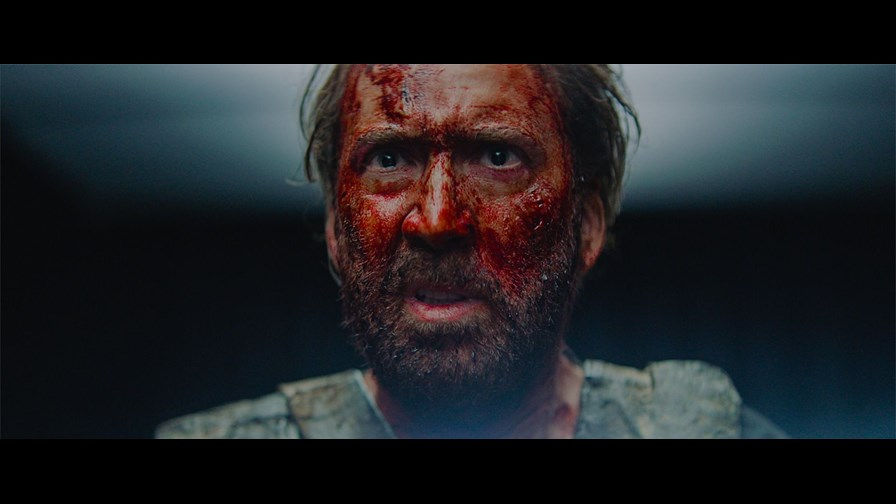
Recently I watched Mandy, a psychedelic thriller/mystery film that came out in early September of 2018. Directed by Panos Cosmatos, the premise follows young couple, Mandy Bloom (Andrea Riseborough) and Red Miller (Nicolas Cage) living a quiet life together in a cabin just along the lake.
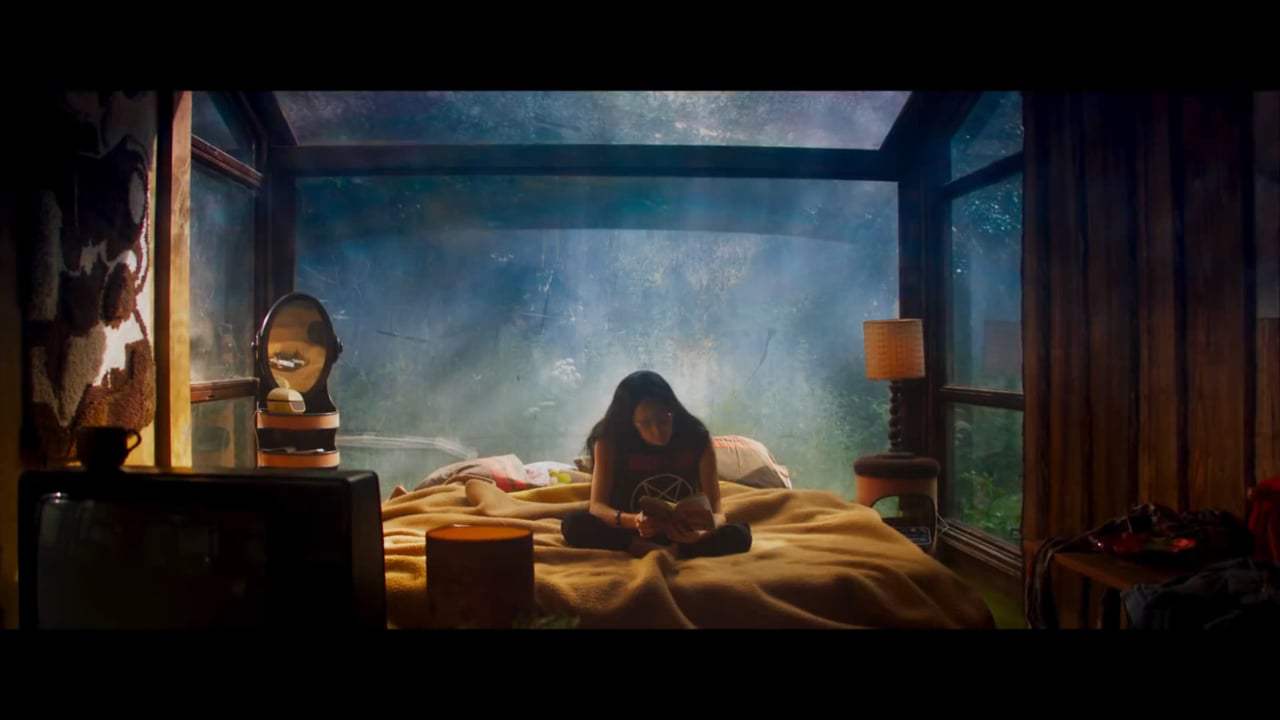
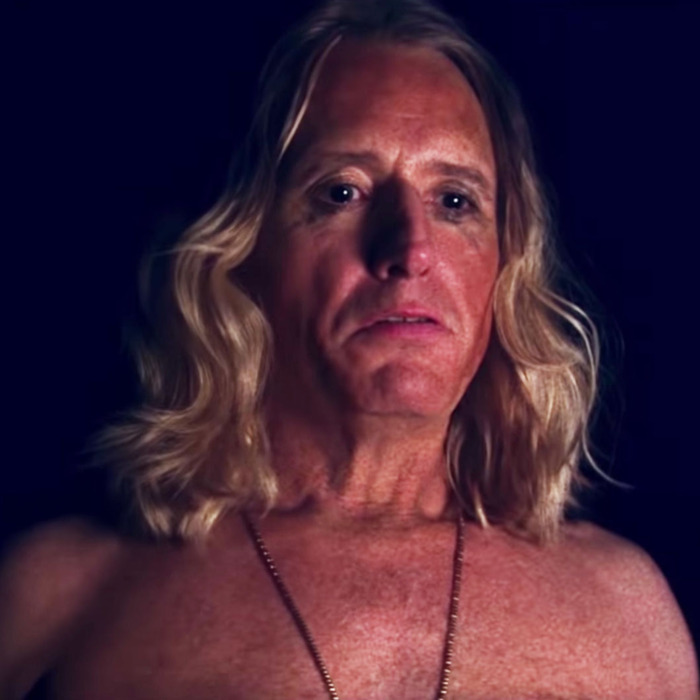
Taking place somewhere near Shadow Mountain during 1983, the tranquility of the couple’s seclusion abruptly falls apart when sadistic cult leader, Je-remiah Sand (Linus Roache), falls infatuated with Bloom after noticing her while on her way to work. With the aid of his followers and LSD fueled biker gang, Black Skulls, Je-remiah successfully breaks into the couple’s home to kidnap the pair during the dead of night.
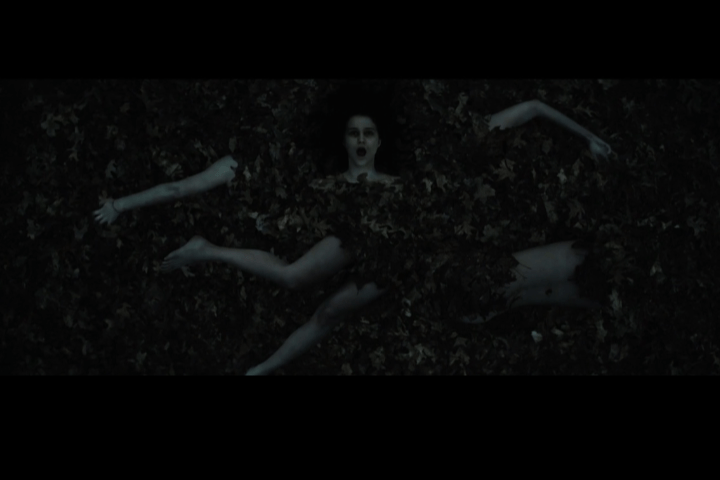
Drugged by his followers, Mandy viciously laughs at Je-remiah once he “presents” himself to her, ultimately arousing the cult leader into a fury of rage. Unable to accept the emotional strain of Mandy’s rejection, Je-remiah breaks under the pressure and sets to burn the young woman alive in front of her gagged and bounded lover.
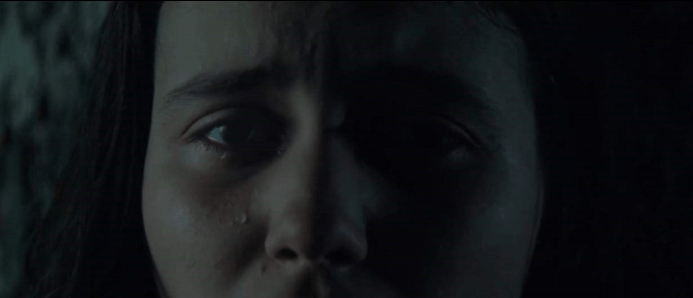
Finding a way to free himself, Red returns to his home mourning the loss of his partner through tearful screams and heavy consumption of alcohol. Consumed by his greif, Red’s mental stability deteriorated as he prepared for a vengful hunt to kill each participant of Je-remiah’s cult.
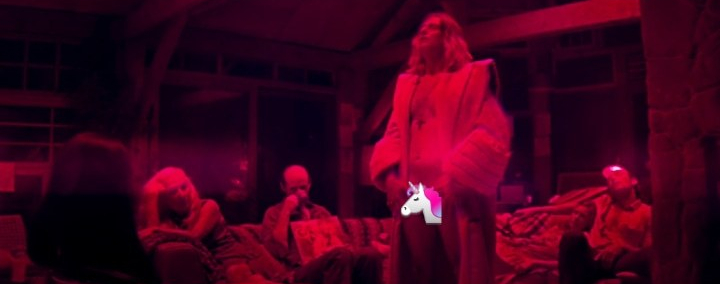
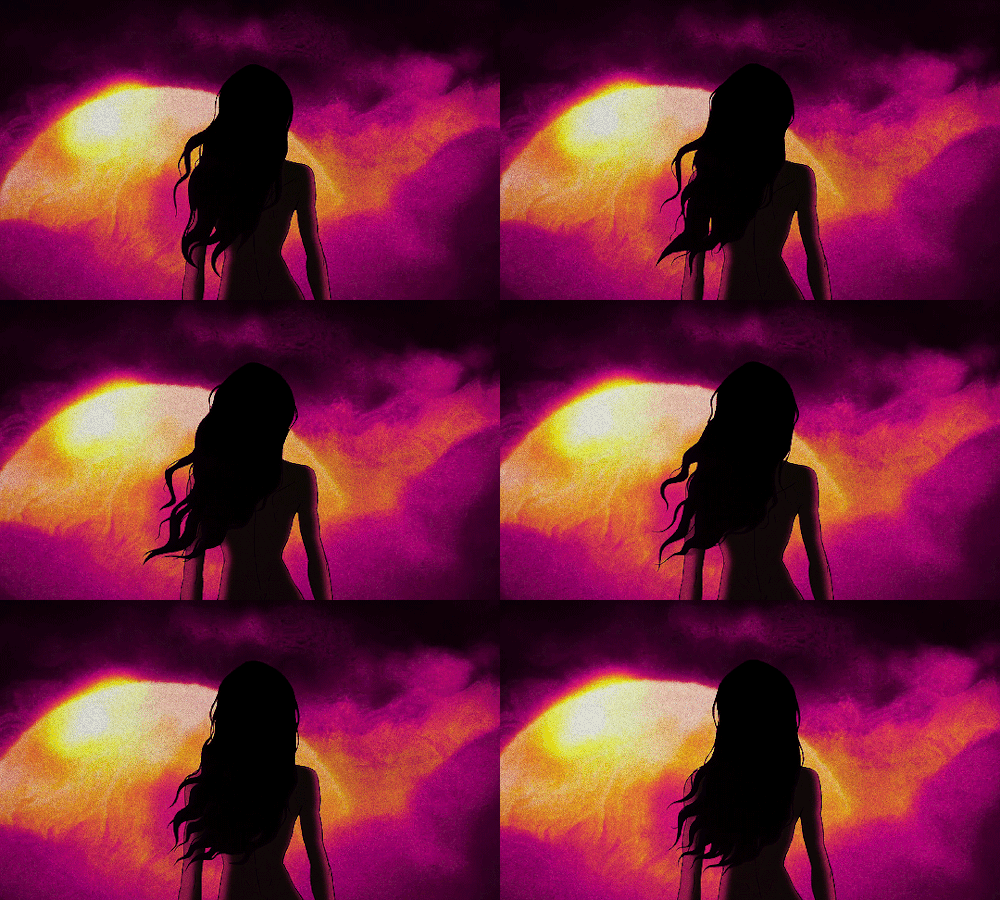
One of the most extraordinary aspects of this film is the incredible cinematography of Benjamin Loeb. Vivid interlacings of color induce a strikingly surreal and dream-like quality to the overall visuals. Additionally, Loeb’s particularity of color arrangement coincides with certain thought processes/events that a character may have been experiencing/reflecting on at the time, in addition to placing heavy emphasis on allegorical symbolism juxtaposed with sinful attribution.
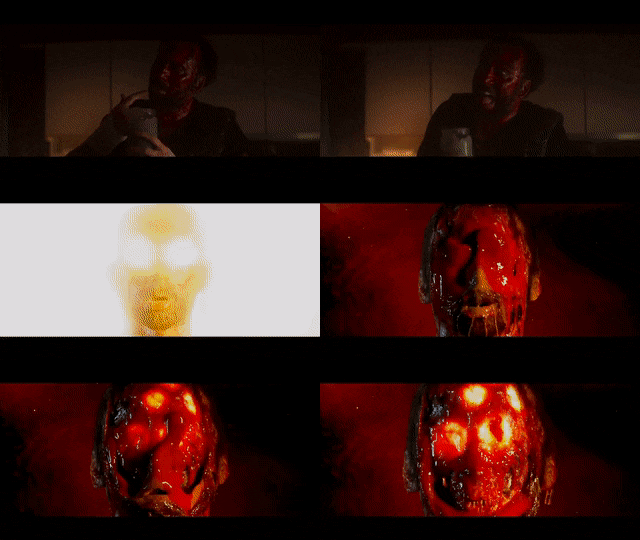
This is particularly evident during the moment we are invited to gaze upon Je-remiah’s indulgence of his own, most primal, elements. Bathed in a deep red, with arms spread apart, Je-remiah stands erect above his reclined followers, assuming the physical embodiment of the cross. Loeb’s color precision during this scene, provides the viewer with a senseous lucidity in the desires of sin being committed for a “better good”.
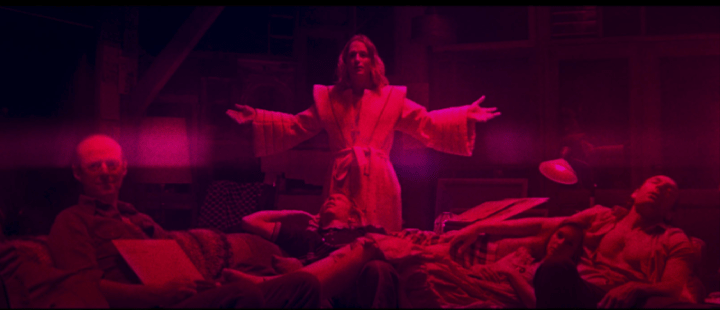
The true brilliance of Loeb’s colorworld however, is that it provides an experience rather than placing one in the position of simply just watching these events take place externally. Under the deepest red and visual distortion, we begin to see through the eyes of Mandy once affected by the drugs. Je-remiah comes forward to us through subtle overlays of Mandy’s face reflected above his own. It’s within this moment that we ourselves actually begin to feel the same sensations of these hallucinagenics.


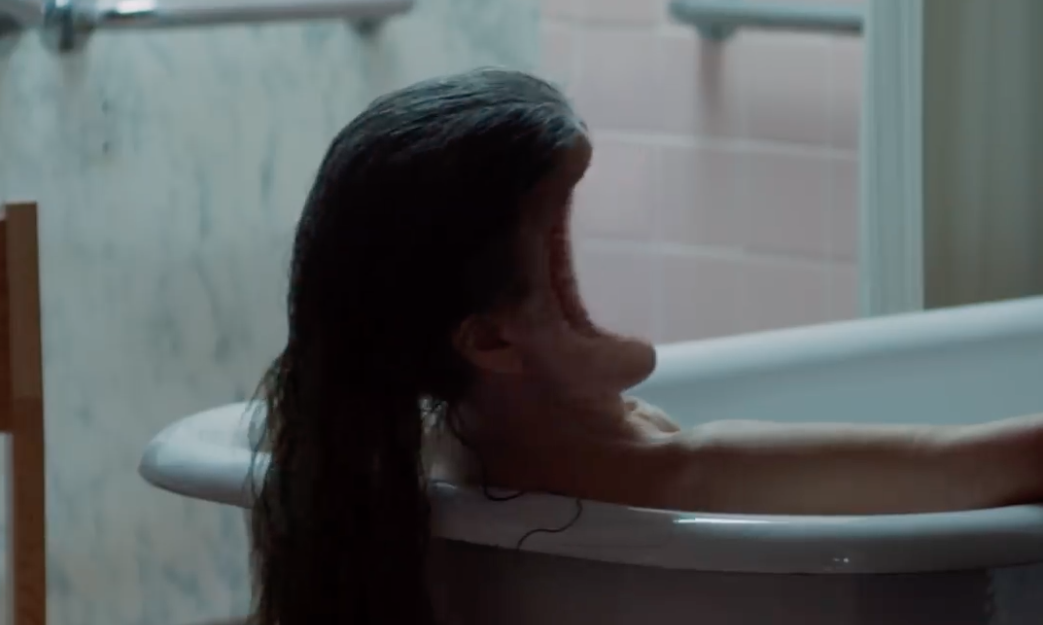
In contrast to the darker pallet that encompasses the cult, a much softer collection of pastels expose something very different for Red and Mandy. Lilacs and blues veil the young couple during a scene where Mandy recalls a traumatic experience from her childhood.
Little of the pair’s backstories are openly provided, other than their current employment and where they reside. Previous hardships are only hinted to us by a scar under Mandy’s left eye, indicating potential abuse, and the absolute vigor of Red’s drinking over her passing, expressing that he were perhaps a recovering addict prior.
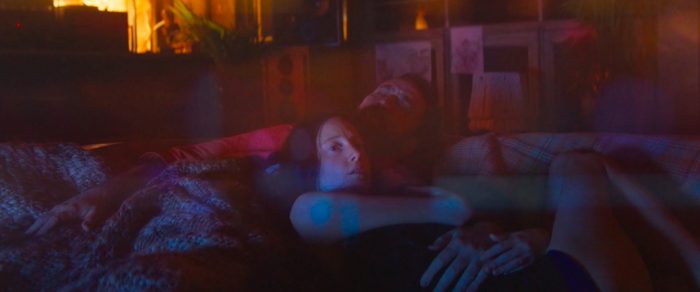
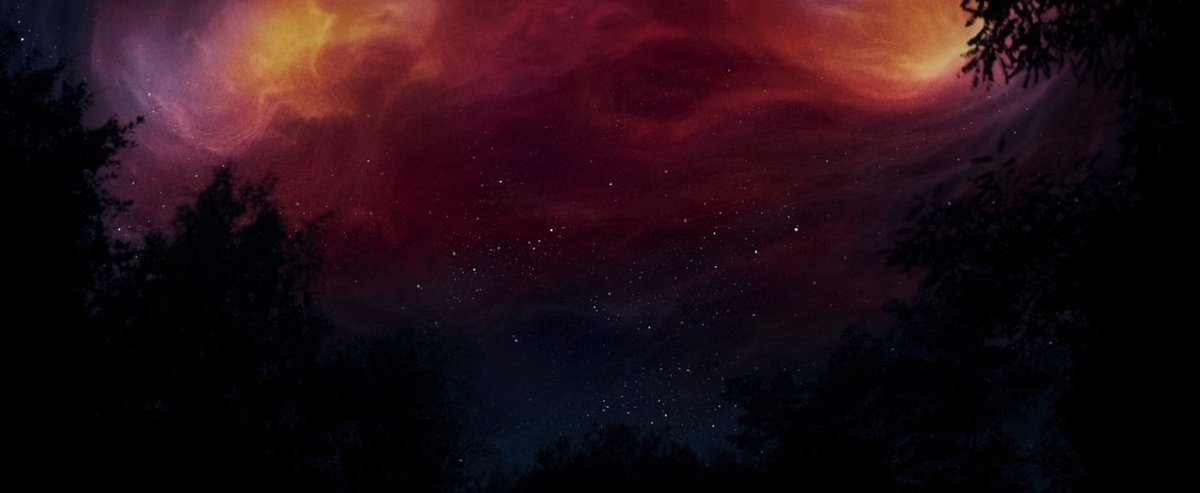
Unfortunately however, these beautiful communications of color that enforce such delicately whimsical, dream-like sensations, quickly becomes underscored by a rather less than tasteful ending. Had the film ended with Red bound and helpless to free his love, the story protrayed would have been much more successful and relatable. Part of what made this film such a success in the beginning, was how well it delivered possibility for the viewer to connect with the characters and their experiences. Addiction, loss, shame, rejection and grief are elements that can often be easily relatable to, to some degree.
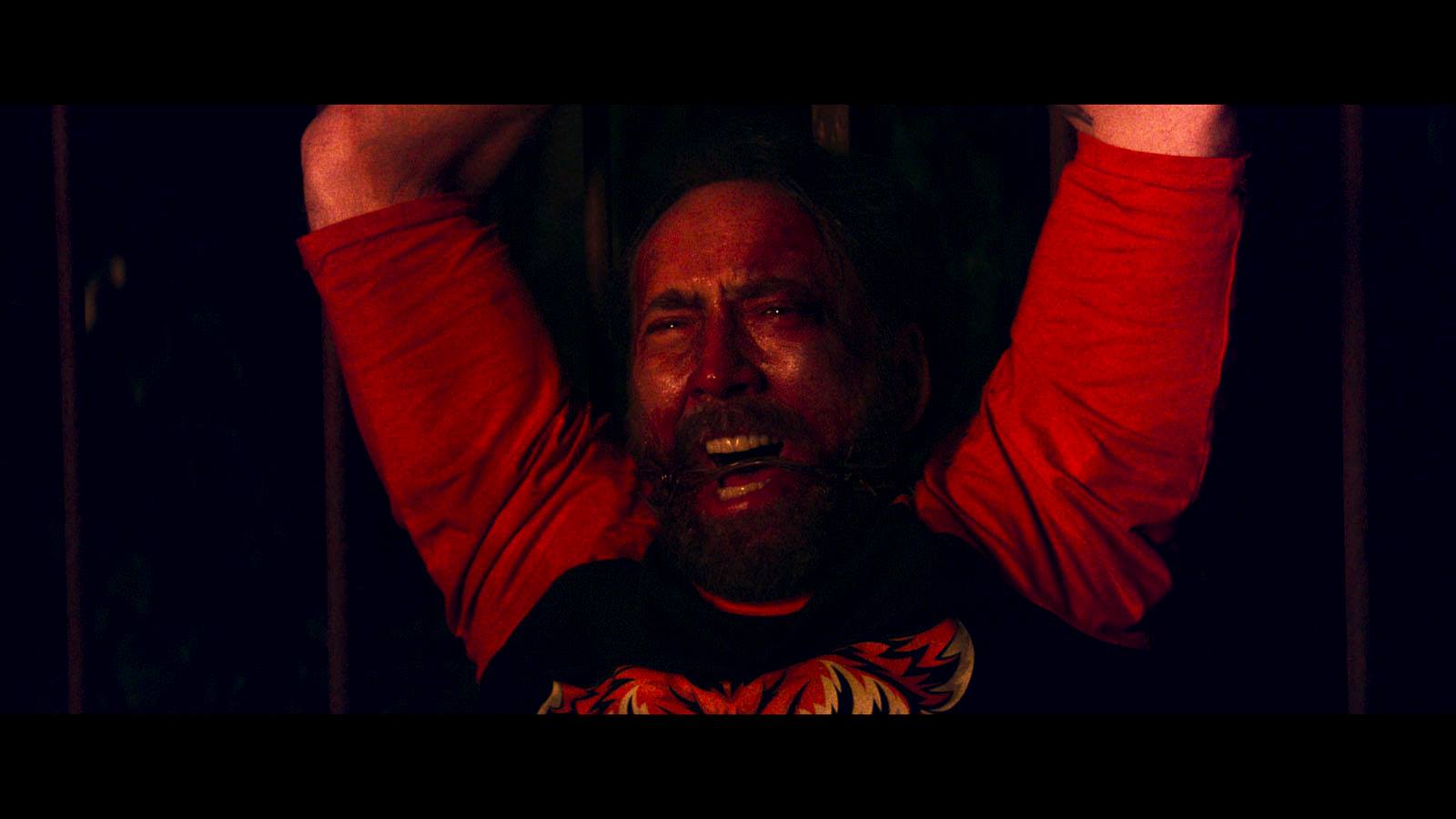
Nicholas Cage’s realization of the devestation and loss that Red was suffering with, was nothing less than a beautiful and intimate performance. However, from there after, the actor’s dispotion spiraled from a serious temperment to that of a more humorously crazed one.
It’s not a secret that the film sought to outline Red’s progression of a shattered mental stability with the affects of it from over time. This could have been approached in a severely different matter however, rather than simply having the character screaming a bit too over the top with goofy faces. With this, Red started to be protrayed as “delusional” in the most obvious, cliche and chainsaw swinging way. It perhaps would have benefited the film to have had the character “shelter” his hatred and react in a more subtle fashion.
Although the spontaneous style of Cage’s acting is ultimately the very attribution that brought him to fame in the first place, such spontaneity hadn’t been needed for this particular film in order to work. Consequently, it severed all possibility of the viewer to achieve an experience that was transcribed so successfully earlier in the film.
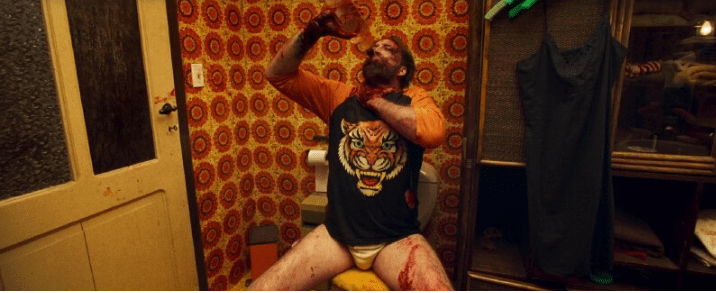
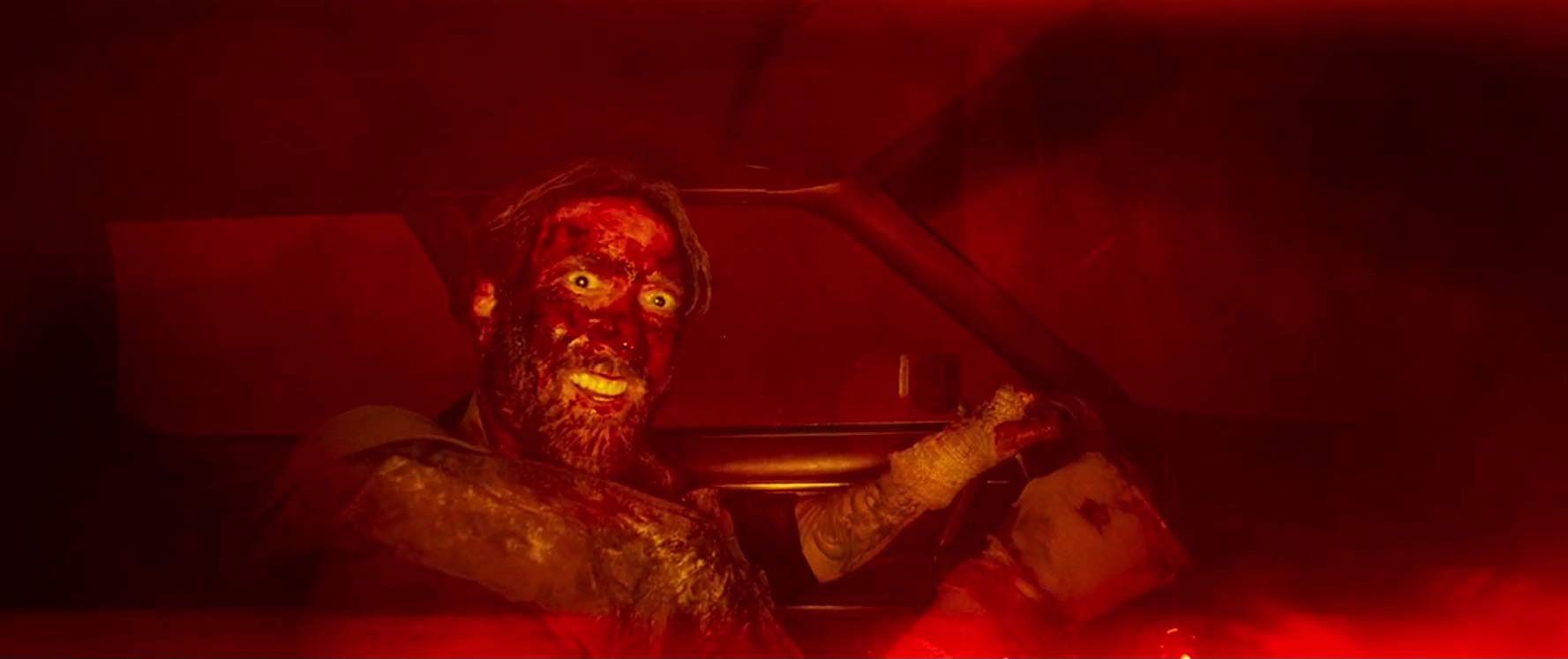
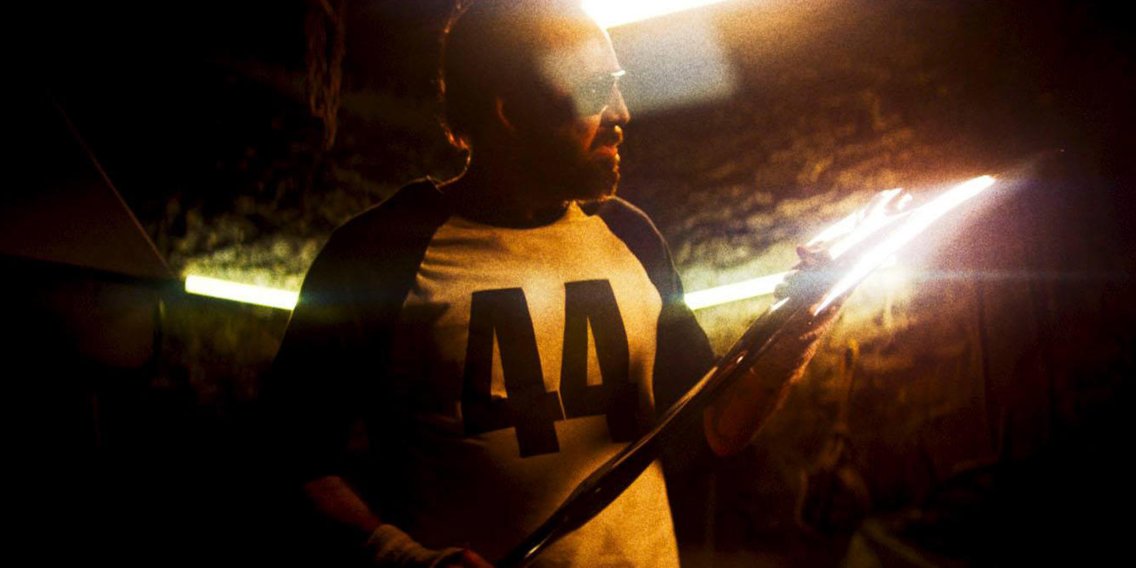
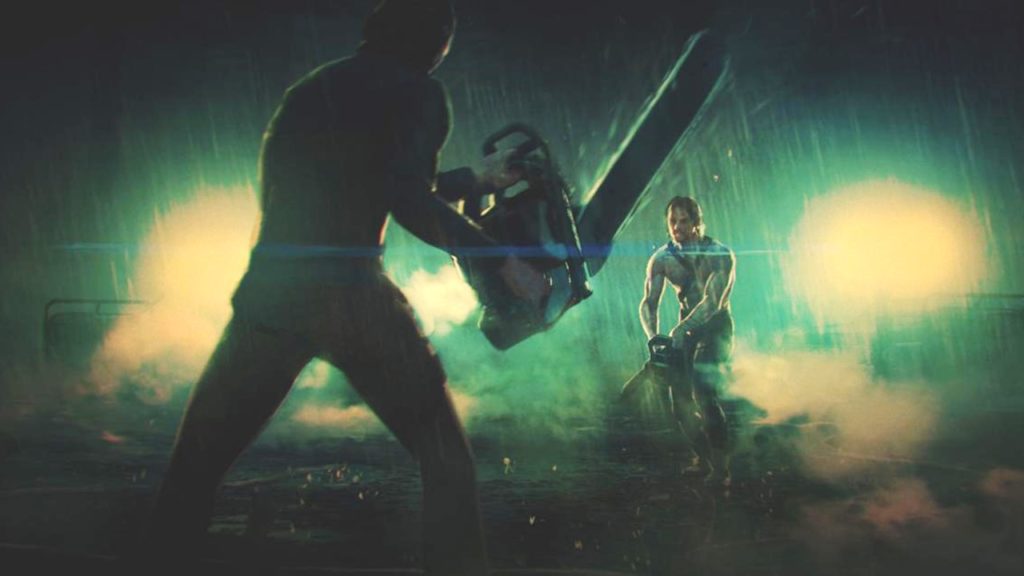
As Red begins to kill off one by one each member of the cult (including the crazed, penis sythed, LSD driven Black Skulls) he saves the very best for last; Je-remiah Sand. Before doing so, however, he made it a point to slip in a little bit of the biker gang’s lovely magic into his own system…perfect idea? Hmmm, debateable.
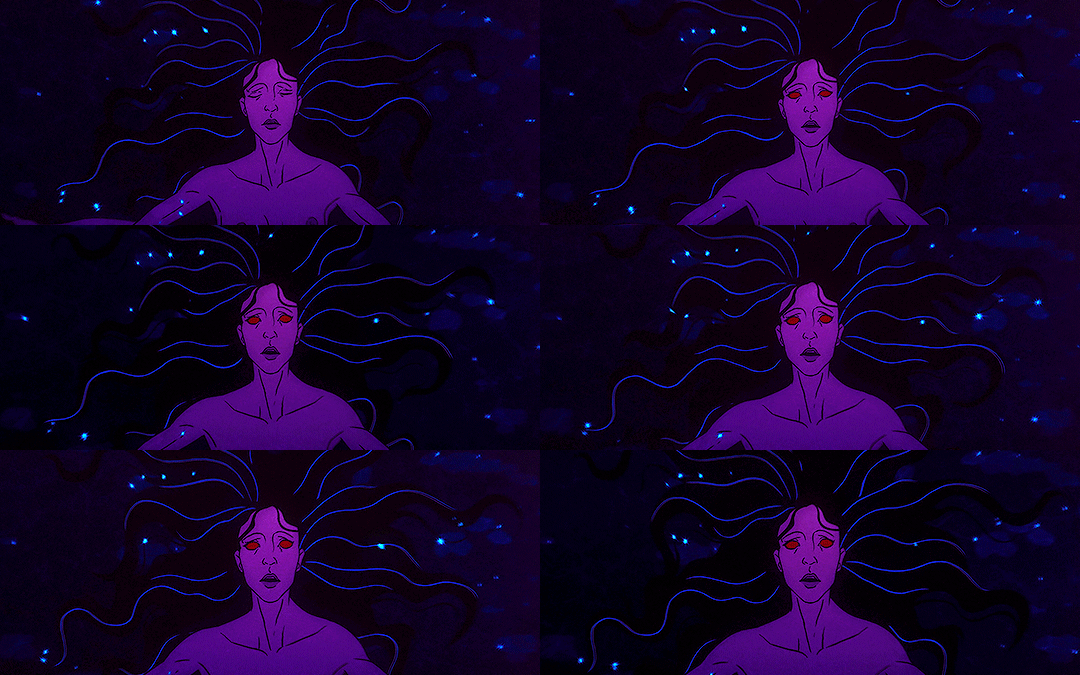
At this point, with blood flying everywhere, unnecessary intermissions of 2-D scenes and bizzar flashes of LSD trips with a caged tiger roaring to the sky, it genuinely feels as if it becomes a completely different film all together with. Regrettably, this made it rather difficult to appreciate the film for its abandonment of sincerity.

Over all, despite having such a brilliant application of visuals, it was exceptionally disappointing to see the film turn down such an ill though-out road. That being said, the piece is well worth a watch, just to gain the core beginning experience.
Thanks for having a look and I hope you all enjoyed!
See anything you agreed with or want to hear more thoughts on? Feel free to let me know! Suggestions always welcome, especially for the next film review!
Cheers everyone!
I do not own any of the stills, artwork or gifs used for this review *


 RochelleTascaArt